Glamping in yurts, domes and safari tents is often listed side by side on booking pages, as if the three were interchangeable. In practice, they are very different structures, and the one you pick shapes everything from how warm you’ll be on a cold night to how much you’ll pay per night. Many travelers book a photo first and only later discover the canvas walls they admired don’t handle snow, or that a transparent dome means waking with the sun whether they like it or not.
This guide breaks down what each structure actually offers. We’ll define what these three glamping types have in common and where they differ, then look closely at yurts, geodesic domes and safari tents one by one. From there, you’ll find advice on matching a structure to your season and climate, plus practical booking, group size and budget tips. A short summary at the end helps you decide which option fits your trip best.
What Glamping in Yurts, Domes and Safari Tents Actually Means
All three of these structures share one thing that separates them from traditional camping: they are permanent or semi-permanent setups. That means you arrive to a made bed with real linens, and in many cases a private bathroom steps away from your sleeping area. There’s no tent to pitch, no air mattress to inflate, and no trek to a shared shower block in the rain.
Where they differ is in four key areas: shape, climate tolerance, privacy level and how close you feel to the outdoors. A round yurt with canvas walls feels very different from a geodesic dome with transparent panels, and a safari tent on a wooden deck offers yet another experience. These differences affect not just comfort but also how much of the landscape you see and hear from your bed.
Why the choice affects your budget and your dates
Prices and availability vary widely by structure type, so your choice has real consequences for both wallet and calendar. Some structures are only practical in certain months, while others stay open year-round. Before falling in love with a listing, it pays to understand what each option actually is, what it costs on average, and which season it handles best. The sections below walk through each structure in detail so you can match the right one to your trip.
Yurts: Round Canvas Living for Three Seasons
A yurt is instantly recognizable: circular canvas walls rising to a central dome skylight at the top of a gently sloping roof. That skylight is more than decoration, since it lets in natural light during the day and gives you a view of the sky from bed. Step inside and you’ll find the classic layout is one open room, with no internal walls to divide the space.
Most yurts sleep between 2 and 6 people on proper beds or futons arranged around the circular floor. The round shape creates a surprisingly cozy atmosphere, and families appreciate that everyone shares the same space rather than being split up. If you’re traveling with a group, a single yurt can often house everyone under one roof.
Value and warmth
Yurts are typically the best value of the three structures, with nightly rates generally running $100-$200. The trade-off is in the walls: canvas is breathable rather than airtight, so it handles mild weather well but lets cold in when temperatures drop. On chilly nights you’ll want a wood stove, and many yurt camps provide one along with firewood. If winter stays appeal to you, look for a yurt with a stove and an insulated deck.
As for setting, yurts shine in meadow, steppe and mountain landscapes where wind and mild temperatures dominate. The aerodynamic round shape shrugs off breezes that would flap a flat-sided tent, which is why yurt camps so often appear in open, exposed terrain.
Geodesic Domes: Year-Round Views and Weatherproofing
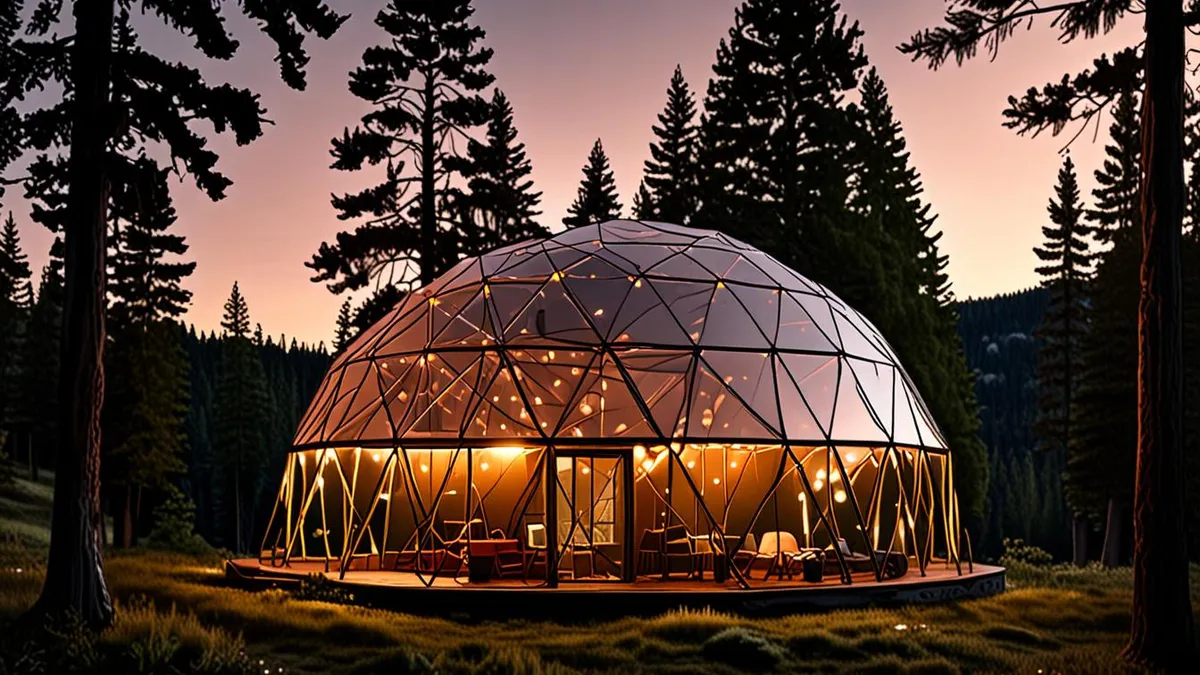
A geodesic dome is built from triangular panels that fit together into a curved, incredibly stable shell. Some of those panels are clear, others solid, and the mix determines both the light inside and the view out. Of the three glamping structures, domes are the most weatherproof, handling snow and rain that would end a canvas stay. That makes them the only true year-round option, including winter.
The clear panels are the big draw: they deliver panoramic views of the surrounding landscape and, on clear nights, a sky full of stars from the comfort of your bed. That same transparency comes at a cost, though. Heating and cooling a dome takes more energy than the other structures, and that shows up in nightly rates of roughly $150-$350.
Sleeping arrangements and morning light
Domes typically sleep 2-3 people, which makes them best suited to couples or solo travelers rather than larger groups. If you’re booking for a family or a group of friends, you’ll likely need multiple units.
One thing to check before booking: how dark does the interior get? Transparent panels mean sunrise arrives early and bright. If you need darkness to sleep, look for listings that mention blackout curtains or solid panels on part of the dome. Some operators offer both clear-panel and solid-panel versions, so it’s worth comparing options at the same site before you commit.
Safari Tents: The Most Space and Hotel-Style Comfort
Safari tents borrow their design from the canvas lodges used on African expeditions, and the modern versions are far closer to a hotel room than a tent. You typically step up onto a raised wooden deck and through a proper door into a space that often runs 40-60 square meters. Instead of one open room, you usually get separate sleeping areas, a real bathroom with plumbing, and a furnished veranda for sitting outside.
This is the most hotel-like of the three options. Beds are full-size and dressed with proper linens, there is generally solid furniture throughout, and some setups even include a bathtub. If you are traveling with someone who likes the idea of nature but insists on real comfort, a safari tent is usually the easiest sell.
What the price gets you
That comfort comes at the highest price tier of the three, with nightly rates typically running $200-$450. In exchange, you get the most space and the most amenities, so couples and families who value room to spread out often find the premium justified.
The main limitation is the canvas itself. It is not insulated, so the practical season is roughly April-October in most temperate destinations. Outside that window, nights get cold and the tent loses heat quickly. In midsummer, expect the canvas to heat up noticeably in the afternoon, so plan midday activities away from the tent and enjoy it in the morning and evening.
Choosing by Season and Climate
Timing matters more when booking a glamping trip than a regular hotel stay, because canvas and panel structures each handle weather differently. The dome is the clear pick for winter or shoulder-season trips: its solid, weatherproof panels make it the only one of the three reliably open year-round, including in snow. Yurts and safari tents are fair-weather structures by comparison, and many operators simply shut them down in the cold months.
In summer, temperate climates make all three workable, but the day-to-day experience differs. A safari tent can turn uncomfortably warm at midday when the sun beats down on the canvas, while a yurt’s breathable canvas walls handle wind well and stay pleasant in breezy, open terrain. Domes sit somewhere in between, though their transparent panels can make the interior warm on sunny afternoons.
- Some yurt camps close entirely from November through March, so a camp that looks open online in summer may have no winter availability at all.
- Shoulder-season trips in spring and fall often mean cold mornings and warm afternoons, so ask whether the unit includes heating before you commit.
- Transparent dome panels that show stars at night also let in early morning light, worth considering if you are sensitive to waking with the sun.
- Mountain and meadow sites can sit at elevations where temperatures drop sharply after dark, even in summer, so pack layers regardless of the structure type.
Whatever the season, always confirm the site’s stated operating season rather than assuming. Dates vary by operator and destination, and the difference between two nearby camps can be several weeks at the start or end of the season.
Booking, Group Size and Budget Tips
Glamping works best when you match the structure to your group rather than forcing a group into the wrong structure. Yurts typically sleep 2-6 people, domes 2-3, and safari tents 2-4. If you have a larger party, the standard approach is to book multiple units side by side rather than looking for one oversized option, which rarely exists at most sites.
Availability is the other constraint. Summer weekends at popular sites fill quickly, so book 2-4 months ahead for regular summer weekends and 6 or more months ahead for peak July-August dates. Most glamping sites also enforce a 2-night minimum stay on weekends, so a one-night drop-in is usually not an option from Friday to Sunday.
Comparing value beyond the headline rate
Each structure sits at a different price tier, and the higher rates generally buy more comfort rather than just more space. Safari tents often include the most amenities, such as full bathrooms and furnished decks, so compare what is actually included rather than judging on the nightly figure alone.
- Ask whether linens, towels and firewood are included in the rate, since some sites charge separately for wood stove fuel, especially in cooler months.
- Booking a midweek night instead of a weekend can sidestep the 2-night minimum and sometimes brings lower rates at the same property.
- For groups of five or six, a single yurt is often cheaper than two smaller units, so check maximum occupancy before splitting the booking.
- Dome rates can vary within the same camp depending on how many panels are transparent, with full-view units usually priced at the top of the range.
Finally, factor in what you would otherwise spend. A safari tent with a kitchenette or nearby dining can replace restaurant meals, which narrows the gap between the price tiers more than it first appears.
Which Glamping Structure Is Right for You
So which one should you book? If budget leads your decision, a yurt is hard to beat. You get a cozy round space with real beds for $100-$200 per night, and it works well across three seasons in windy, mild settings. Just remember that canvas breathes, so cold nights call for a wood stove.
Domes are the pick if weatherproofing and views matter most. Their triangular panels handle snow and rain, making them the only true year-round choice, though transparent walls mean higher heating and cooling costs. Safari tents deliver the most space and hotel-style comfort, often with separate bedrooms and verandas, at the highest price of $200-$450 per night. They shine in the April-October window but can heat up at midday. Match the structure to your season, group size and comfort expectations, and the choice becomes simple. Which one would you pick? Share your thoughts or this article with a fellow traveler.